MEET THE GOOGLE.ORG IMPACT CHALLENGE: AI FOR SCIENCE RECIPIENTS
Accelerating scientific breakthroughs with the power of AI
AI was a critical lever to unlock scientific breakthroughs and understand the fundamental mechanisms of human health and climate systems. Building on the success of the inaugural AI for Science fund, Google.org launched a supercharged initiative at the intersection of artificial intelligence and scientific discovery. By empowering researchers with catalytic funding and technical expertise, we aimed to accelerate the understanding of key scientific questions—achieving Nobel-level breakthroughs and enabling science at digital speed.
The Google.org Impact Challenge: AI for Science was a $36M global open call designed to empower researchers and organizations with the funding, tools, and technical expertise they needed to accelerate scientific breakthroughs. Beyond funding, selected organizations were eligible to participate in a Google.org Accelerator and received six months of dedicated pro bono technical support from Google experts, along with access to Google Cloud credits to help bring those projects to life.
Focus areas
Proposals were sought leveraging AI to help accelerate scientific breakthroughs in the fields of Health & Life Sciences and Climate Resilience & Environmental Science.
-
Health
Accelerate scientific breakthroughs in the field of health and life sciences by supporting projects that decode the fundamental mechanisms of life and produce foundational models, agents, open datasets, and a predictive understanding of biology to revolutionize human health.
-
Climate resilience
Accelerate scientific breakthroughs that improve climate resilience, supporting projects that answer critical, unresolved questions about our planet’s living systems and/or enable novel approaches to better preserve those systems.
Recipients
We are delighted to announce the selected projects for the Google.org Impact Challenge: AI for Science.
-
Climate resilience
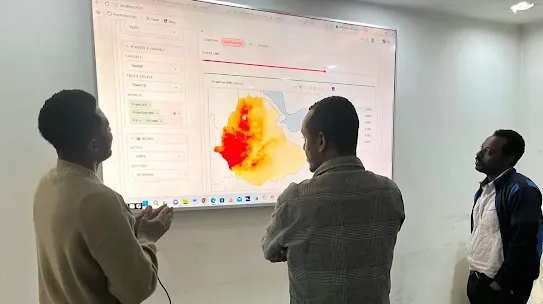
AfriClimate AI LimitedDecoding the atmospheric precursors of deadly storm systems across Africa, combining satellite data with sparse symbolic regression to extend flash-flood warning times and reach millions across the Sahel and East Africa.
Learn more
AfriClimate AI Limited -
Health
AITHYRA Research Institute for Biomedical Artificial Intelligence of the Austrian Academy of Sciences - together with EPFL, SwitzerlandCombining machine learning and high-throughput experimentation to uncover how viruses manipulate human cells, and using these insights to identify new therapeutic targets for human disease.
Learn more
AITHYRA
EPFL -
Health
Allen InstituteDesigning DNA sequences that reach brain cell types vulnerable to neurodegenerative diseases, developing a lab-in-the-loop AI platform to design synthetic enhancers and openly sharing every model, sequence, and result.
Learn more
Allen Institute -
Health
Australian National UniversityA clinically deployable, two-tiered AI engine reconstructing complex gene networks from an expertly curated multi-omics cancer atlas to predict tumor resistance before treatment begins.
Learn more
Australian National University -
Climate resilience
INRIA Chile Research CenterBuilding an open, multimodal world foundation model of the ocean to increase our understanding of Earth's last great unknown, integrating fragmented physical, biogeochemical, and biodiversity data into a digital twin of marine ecosystems.
Learn more
INRIA Chile Research Center -
Climate resilience
Massachusetts Institute of TechnologyDeveloping visual intelligence for the microscopic world by training AI agents to autonomously interpret experimental imagery, accelerating automated materials discovery.
Learn more
Massachusetts Institute of Technology -
Climate resilience
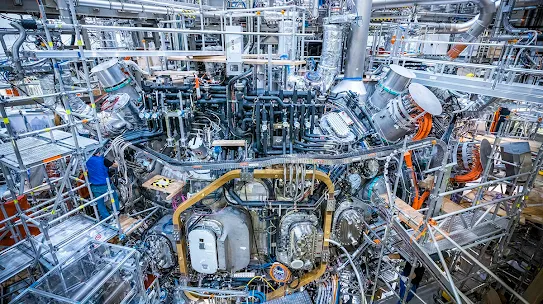
Max Planck Institute for Plasma Physics and Eindhoven University of TechnologyUsing interpretable, physics-informed AI to model stellarator turbulence, bridging the simulation-to-reality gap for clean fusion energy by using physics-informed AI to model stellarator turbulence.
Learn more
Max Planck Institute
Eindhoven University of Technology -
Health
National University of SingaporeCreating foundational infrastructure for AI-driven variant interpretation, using predictive models to map how genetic variants regulate RNA splicing at a population scale so researchers can predict impacts without new experiments.
Learn more
National University of Singapore -
Health
New York University Grossman School of MedicineBuilding an AI-driven technology for high-fidelity mapping of DNA damage across the genome, helping scientists uncover previously unknown natural and environmental causes of mutations.
Learn more
New York University Grossman School of Medicine -
Climate resilience
The University of Texas at AustinDeveloping neural network surrogate models to enable transport-consistent reactor design, unlocking a treasure trove of compact, high-beta stellarator fusion devices.
Learn more
The University of Texas at Austin -
Health
University of California, BerkeleyBuilding a concept-discovery pipeline to spot hidden disease signals in ECGs and biopsies, extracting interpretable hypotheses from medical AI models to turn black-box predictions into clear clinical biomarkers.
Learn more
University of California, Berkeley -
Climate resilience
University of California, San DiegoPioneering an agentic AI pipeline that discovers interpretable equations from Earth observations, calibrates them in a differentiable climate model, and directs new ocean observations to where they most reduce projection uncertainty.
Learn more
University of California, San Diego -
Climate resilience
University of CambridgeIntegrating optical microscopies with physics-based foundation models to forecast and mitigate degradation in sodium-ion batteries for grid scale energy storage.
Learn more
University of Cambridge -
Health
University of Cape TownDeveloping an AI-powered platform to map genetic variation in African drug-metabolising genes, helping improve treatment safety and guide clinical drug choices.
Learn more
University of Cape Town -
Health
University of PittsburghUsing a novel geometric AI model to compare heart regeneration across species, identifying missing genetic switches and testing top candidates in lab-grown human hearts to accelerate new cardiac therapies.
Learn more
University of Pittsburgh -
Health
University of TorontoMapping the design space for peptide-based drugs by combining AI and automation to create an open dataset and foundation model for AI-guided therapeutic design.
Learn more
University of Toronto -
Climate resilience
University of WashingtonDesigning proteins with natural language for sustainability applications, utilizing protein structure diffusion models to accelerate generative enzyme design.
Learn more
University of Washington